Plastic Surgery Includes Reconstruction and Improvement
Plastic surgery includes both reconstruction and improvement.
Reconstructive plastic surgery is about restoring normalcy after trauma, burns, wounds, scars, surgery, infection, tissue loss, congenital problems, or failed healing.
Aesthetic and cosmetic plastic surgery are about improving appearance, proportion, contour, symmetry, aging changes, scar appearance, and balance.
Both are built on the same foundation: tissue handling, blood supply, scar placement, tension control, contour, proportion, symmetry, wound healing, and surgical judgment.
Patients searching for cosmetic surgery in Delray Beach, Boca Raton, Boynton Beach, or Palm Beach County are often looking for improvement in facial aging, eyelid appearance, skin laxity, neck contour, body contour, scar appearance, symmetry, proportion, or revision after prior surgery.
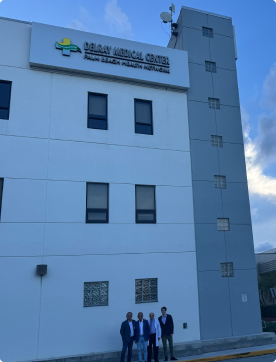
Plastic Surgery Trauma Associates is a hospital-based plastic surgery group serving Delray Beach, Boca Raton, Boynton Beach, Palm Beach County, and South Florida. This page connects cosmetic surgery, aesthetic plastic surgery, scar revision, contour concerns, revision surgery, wound healing, and reconstructive plastic surgery into one coherent plastic surgery authority cluster.
For the broader regional plastic surgery hub, see Plastic Surgery in Delray Beach and Palm Beach County
Cosmetic and Aesthetic Plastic Surgery in Palm Beach County
Cosmetic and aesthetic plastic surgery may involve facial aging, eyelid appearance, neck contour, body contour, abdominal contour, loose tissue after weight change, scar appearance, contour irregularity, asymmetry, and revision after prior surgery.
Not every concern requires surgery, and this page is not a full cosmetic procedure menu. The purpose is to connect cosmetic and aesthetic concerns to the broader plastic surgery principles of tissue handling, blood supply, scar control, contour, proportion, symmetry, wound healing, and surgical judgment.
For search engines and patients, this page helps clarify that cosmetic surgery, aesthetic plastic surgery, scar revision, contour correction, revision surgery, and reconstructive plastic surgery are connected parts of the same plastic surgery field.
Cosmetic and Aesthetic Plastic Surgery Search Intent
A search for cosmetic surgery may involve many different concerns.
Some patients are looking for elective aesthetic improvement. Others are looking for help after a scar, dog bite, burn, traumatic wound, surgical incision, contour irregularity, or prior procedure changed appearance or symmetry.
Common cosmetic and aesthetic concerns may include:
- Facial aging
- Eyelid appearance
- Neck and facial contour
- Skin laxity
- Body contour
- Abdominal contour
- Loose tissue after weight change
- Scar appearance
- Widened or thickened surgical scars
- Cosmetic scar revision
- Revision after prior cosmetic surgery
- Contour irregularity after trauma, surgery, or wound healing
- Symmetry, balance, proportion, or visible healing concerns
This page does not need to function as a full cosmetic procedure menu to be relevant to cosmetic surgery. It explains cosmetic surgery as part of the broader field of plastic surgery.
Selected Cosmetic and Aesthetic Concerns Evaluated
Cosmetic and aesthetic concerns may be purely elective, or they may overlap with reconstructive problems after trauma, burns, wounds, scars, surgery, or poor healing.
Selected concerns that may lead patients to search for cosmetic surgery or aesthetic plastic surgery include:
But appearance is not expertise.
- Facial aging or visible aging change
- Eyelid appearance or eyelid asymmetry
- Neck contour or facial contour concerns
- Skin laxity
- Body contour concerns
- Abdominal contour concerns
- Loose tissue after weight change
- Visible scar appearance
- Cosmetic scar revision
- Dog bite scar appearance
- Burn scar appearance
- Surgical scar widening or thickening
- Contour irregularity after prior surgery
- Revision after prior cosmetic surgery
- Asymmetry after trauma, surgery, or wound healing
- Appearance-related concerns after injury or reconstruction
Cosmetic Surgery and Reconstructive Plastic Surgery Share the Same Foundation
Cosmetic surgery and reconstructive plastic surgery are not separate surgical universes.
They rely on the same core principles:
It is understanding tissue failure.
- Tissue handling
- Blood supply
- Scar placement
- Tension control
- Symmetry
- Contour
- Proportion
- Function
- Structural support
- Surgical judgment
The difference is the clinical goal.
Cosmetic and aesthetic surgery improve appearance, balance, contour, aging changes, and proportion.
Reconstructive plastic surgery restores normalcy when injury, disease, surgery, burns, wounds, scars, or failed healing have altered appearance, structure, function, or quality of life.
The margin for error is different, but the foundation is the same.
That is why reconstructive experience supports the broader authority of a plastic surgery site.
Plastic Surgeon for Cosmetic Surgery Near Delray Beach and Boca Raton
Patients searching for a plastic surgeon for cosmetic surgery near Delray Beach, Boca Raton, Boynton Beach, or Palm Beach County may be looking for help with appearance, contour, scars, aging, symmetry, or revision.
A cosmetic concern may be elective.
It may also follow trauma, surgery, burns, dog bites, wound healing problems, or prior procedures.
Both situations belong within plastic surgery because cosmetic outcomes depend on how tissue heals, scars, moves, stretches, contracts, and survives.
The same plastic surgery judgment used in reconstructive cases also informs cosmetic planning:
- How much tension can tissue tolerate?
- Where should a scar be placed?
- Is blood supply reliable?
- Is tissue thin, scarred, damaged, or previously operated on?
- Is contour irregularity superficial or structural?
- Is a revision reasonable?
- Is wound-healing risk elevated?
- Would a simple cosmetic approach ignore the deeper tissue problem?
Cosmetic surgery is not only surface appearance.
It is surgical planning around tissue, scar, contour, proportion, symmetry, and healing.
Cosmetic Surgery Is Not Just Skin Deep
Good cosmetic surgery depends on understanding what is below the surface.
Skin quality, soft tissue thickness, blood supply, tension, scar behavior, prior surgery, sun damage, smoking, diabetes, anticoagulation, radiation, trauma history, and wound healing all affect surgical planning.
A cosmetic operation can fail aesthetically when these factors are ignored.
A scar can widen.
A wound can separate.
Contour can become irregular.
Tension can distort anatomy.
Blood supply can become compromised.
Tissue can heal unpredictably.
This is why cosmetic surgery should be understood as surgery first.
The cosmetic result depends on biological judgment.
Cosmetic Surgery, Scar Revision, and Reconstructive Judgment
Scar revision is one of the clearest bridges between cosmetic surgery and reconstructive plastic surgery.
Some scars are mainly cosmetic.
Others are reconstructive problems involving pain, tightness, contracture, instability, recurrent breakdown, contour deformity, or functional limitation.
Cosmetic scar concerns may include:
- Visible facial scars
- Widened surgical scars
- Dog bite scars
- Depressed scars
- Raised scars
- Thickened scars
- Contour irregularity
- Asymmetry
- Scars after trauma, burns, or surgery
Reconstructive scar concerns may include:
- Pain
- Tightness
- Contracture
- Scar tethering
- Recurrent breakdown
- Motion restriction
- Unstable scar over bone, tendon, joint, or hardware
- Burn scar contracture
- Functional limitation
Cosmetic and reconstructive scar revision overlap because appearance, contour, motion, and tissue stability are connected.
Cosmetic Scar Revision and Visible Healing Concerns
Cosmetic scar revision is one of the most natural search bridges between cosmetic surgery and reconstructive plastic surgery.
Patients may search for cosmetic surgery because a scar is visible, widened, thickened, depressed, raised, discolored, asymmetric, painful, tight, or located in a highly visible area such as the face, eyelid, lip, cheek, nose, neck, hand, arm, or leg.
A scar may be cosmetically concerning even when it is medically stable.
A scar may also be reconstructive when it causes pain, tightness, motion restriction, recurrent breakdown, contracture, or contour deformity.
That distinction matters.
A cosmetic scar concern focuses on appearance.
A reconstructive scar concern focuses on restoring normal tissue behavior, stability, motion, or function.
Many scars involve both.
Cosmetic Surgery After Trauma, Burns, Dog Bites, and Wound Healing
Many patients do not search for cosmetic surgery because they want a purely elective procedure.
They search because something happened.
A dog bite left a facial scar.
A burn created tight or discolored tissue.
A traumatic wound changed contour.
A surgical wound healed poorly.
A scar widened.
A wound breakdown created deformity.
A hand or facial injury changed appearance and function.
This is where cosmetic and reconstructive plastic surgery overlap.
The question is not only whether something can look better.
The question is whether the tissue can be safely improved.
Revision Cosmetic Surgery and Failed Healing
Revision cosmetic surgery is different from first-time cosmetic surgery.
The tissue may already be scarred.
Blood supply may be altered.
Planes may be distorted.
Skin may be thinner.
Scar tissue may limit movement.
Prior tension may have affected shape.
An implant, flap, graft, closure, or incision may have failed.
Before revision, the surgeon must ask why the first result failed or healed poorly.
Was there too much tension?
Was the blood supply compromised?
Was the scar biologically aggressive?
Was the tissue thin or damaged?
Was there infection, hematoma, seroma, radiation, smoking, diabetes, or mechanical stress?
Was the original plan wrong for the tissue?
Cosmetic Surgery and Wound Healing Risk
Cosmetic surgery is elective, but elective does not mean risk-free.
Every incision creates a wound.
Every wound depends on blood supply, tissue quality, tension, medical risk factors, and postoperative care.
Patients with prior wound complications, smoking history, diabetes, anticoagulation, radiation, infection history, poor scarring, thin tissue, or multiple prior operations may need more cautious planning.
This is where reconstructive plastic surgery judgment matters.
A surgeon who routinely evaluates failed wounds, unstable scars, exposed structures, tissue viability, and complex healing problems brings a different level of caution to cosmetic surgical planning.
Cosmetic Surgery, Contour, and Tissue Mechanics
Cosmetic surgery is often described in terms of appearance.
But appearance depends on mechanics.
Contour depends on soft tissue thickness, elasticity, support, scar behavior, weight change, swelling, skin quality, and how the tissue moves over deeper structures.
Symmetry depends on anatomy and healing.
Scar quality depends on blood supply, tension, closure technique, patient biology, and postoperative forces.
Proportion depends on surgical planning.
Good cosmetic surgery is not just removing or tightening tissue.
It is respecting how tissue survives, moves, stretches, scars, and ages.
Aesthetic Plastic Surgery and Scar-Conscious Surgical Planning
Aesthetic plastic surgery is not only about the immediate visual change.
It is also about the long-term result of healing.
Scar-conscious planning matters because every incision becomes a scar. The quality and position of that scar may determine whether the final result looks natural, balanced, and stable.
Scar-conscious plastic surgery planning considers:
- Incision placement
- Tension direction
- Skin quality
- Blood supply
- Prior scars
- Motion across the scar
- Contour and shadowing
- Tissue thickness
- Healing risk
- Revision options if healing is poor
This is why cosmetic surgery and scar revision belong in the same plastic surgery authority cluster.
Board-Certified Plastic Surgery and Cosmetic Surgery Search
Patients searching for cosmetic surgery should understand the difference between broad cosmetic marketing and plastic surgery training.
Cosmetic surgery is often marketed by many types of providers.
Plastic surgery is a surgical specialty with formal training in both cosmetic and reconstructive principles.
A board-certified plastic surgeon may practice cosmetic surgery, reconstructive surgery, or both.
The reason this matters is simple: cosmetic surgery still requires surgical judgment.
Related Plastic Surgery Topics
- Plastic Surgery in Delray Beach and Palm Beach County
- Scar Revision After Trauma and Burns
- Hardware Exposure and Postoperative Wound Failure
- Extremity & High-Energy Trauma Reconstruction
- Limb Salvage and Replantation
- Peripheral Nerve Reconstruction
- Burn Reconstruction and Contracture Release
- Spinoplastics Spine Soft Tissue Reconstruction
- Geriatric Tissue Salvage
- Research and Publications
- Contact
FAQ
Yes. Cosmetic surgery is part of plastic surgery. Plastic surgery includes both cosmetic surgery and reconstructive plastic surgery. Cosmetic surgery focuses on elective improvement of appearance, contour, aging, and proportion. Reconstructive plastic surgery focuses on restoring normalcy after injury, wounds, burns, scars, surgery, cancer, infection, tissue loss, congenital problems, or failed healing.
Aesthetic plastic surgery is plastic surgery focused on improving appearance, proportion, contour, balance, symmetry, aging changes, and visible healing results. It uses the same surgical principles as reconstructive plastic surgery: tissue handling, blood supply, scar control, tension management, contour, and surgical judgment.
No. Cosmetic surgery is one part of plastic surgery. Plastic surgery is broader and includes reconstructive surgery, trauma reconstruction, wound reconstruction, scar revision, burn reconstruction, hand and nerve surgery, and complex revision after failed healing.
Reconstructive plastic surgery is about restoring normalcy after trauma, burns, wounds, scars, surgery, infection, tissue loss, congenital problems, or failed healing. Cosmetic and aesthetic plastic surgery are about improving appearance, proportion, contour, symmetry, aging changes, and balance. Both use the same plastic surgery principles.
Cosmetic surgery and reconstructive plastic surgery share the same foundation: tissue handling, blood supply, scar control, tension management, contour, symmetry, proportion, and surgical judgment. Reconstructive experience tests those principles in more difficult tissue conditions.
Cosmetic and reconstructive concerns overlap when appearance is affected by scars, burns, trauma, dog bites, wound breakdown, contour irregularity, prior surgery, poor healing, contracture, or tissue loss.
Yes. Scar revision can be cosmetic, reconstructive, or both. A scar may affect appearance, but it may also cause pain, tightness, instability, motion restriction, recurrent breakdown, or contour deformity.
Often, yes. Revision surgery may involve scar tissue, altered blood supply, distorted anatomy, thin tissue, prior wound problems, implants, grafts, flaps, or previous closure failure. The reason for the prior problem should be understood before revision is planned.
Cosmetic surgery results depend on wound healing. Blood supply, tissue quality, tension, smoking, diabetes, anticoagulation, infection, prior surgery, radiation, and scar biology can all affect healing and cosmetic outcome.
Yes. Plastic Surgery Trauma Associates serves Delray Beach, Boca Raton, Boynton Beach, Lake Worth, Palm Beach County, and South Florida.
Educational Disclaimer
This website provides general educational information only. It does not provide medical advice, diagnosis, or treatment recommendations. Use of this website does not create a physician-patient relationship. Medical decisions require direct evaluation by a licensed healthcare professional. For emergencies, call 911 or seek immediate emergency medical care.
Discussion of cosmetic surgery, scar revision, reconstructive plastic surgery, trauma reconstruction, or wound healing is educational only and does not imply that any specific patient is a candidate for surgery.
Reviewed By
Reviewed by Plastic Surgery Trauma Associates
Andrew Mark Klapper, M.D.
Anthony N. Dardano, D.O., F.A.C.S.
Hospital-based reconstructive plastic surgery service
Palm Beach County / South Florida
Last reviewed: 23rd June 2026