Plastic Surgery for Non-Healing Wounds, Exposed Tendon, Bone, Hardware, Failed Closure, and Postoperative Wound Failure
Complex Wound Reconstruction Is Plastic Surgery
A wound that will not heal is not always a dressing problem.
Some wounds fail because the underlying issue is structural: exposed tendon, exposed bone, exposed hardware, poor tissue quality, inadequate blood supply, infection risk, excessive tension, dead space, trauma, prior surgery, radiation, diabetes, anticoagulation, or failed closure.
Complex wound reconstruction is a core part of reconstructive plastic surgery.
Plastic Surgery Trauma Associates evaluates complex wounds through the lens of plastic surgery: tissue viability, blood supply, wound mechanics, exposed structures, infection risk, scar behavior, flap or graft options, and whether durable reconstruction is biologically possible.
For patients, families, physicians, case managers, and attorneys searching for a plastic surgeon for a non-healing wound near Delray Beach, Boca Raton, Boynton Beach, Palm Beach County, or South Florida, the key question is whether the wound is superficial or structurally complex.
Routine wound care can be essential. But when a wound repeatedly fails, exposes deeper structures, breaks down after surgery, or cannot tolerate closure, reconstructive plastic surgery may be needed to determine whether stable soft-tissue coverage is possible.
Plastic Surgeon for Non-Healing Wounds in Delray Beach and Palm Beach County
A non-healing wound may require more than serial dressings when the wound cannot close because of tissue loss, exposed structures, infection risk, blood-supply problems, or mechanical stress.
A plastic surgeon evaluates whether the wound has the soft-tissue coverage required to heal.
- Tissue viability
- Blood supply
- Wound depth
- Exposed tendon, bone, nerve, vessel, joint, hardware, or implant
- Infection or contamination risk
- Prior closure failure
- Scarred or radiated tissue
- Dead space
- Motion, pressure, shear, or tension
- Need for graft, flap, staged closure, or hospital-based reconstruction
For complex wounds, the goal is not simply to make the wound look closed.
The goal is durable coverage that can survive.
When a Wound Becomes Complex
A wound becomes complex when healing is blocked by anatomy, biology, mechanics, or exposed deeper structures.
- Exposed tendon
- Exposed bone
- Exposed orthopedic hardware
- Exposed implant or instrumentation
- Failed surgical closure
- Postoperative wound breakdown
- Chronic non-healing wound
- Traumatic soft tissue loss
- Crush injury
- Degloving injury
- Burn-related wound instability
- Infection-risk wound
- Scarred or radiated tissue
- Fragile geriatric skin
- Recurrent wound breakdown
In these cases, the question is not simply whether a wound can be covered.
The question is whether the reconstruction will survive.
Plastic Surgery for Wounds That Will Not Heal
A wound that has failed to progress despite appropriate care may require reconstructive plastic surgery evaluation.\
- Whether blood supply is adequate
- Whether tissue is viable
- Whether infection or contamination is controlled
- Whether tendon, bone, nerve, vessel, joint, or hardware is exposed
- Whether the wound requires flap coverage
- Whether a skin graft can survive
- Whether prior closure failed because of tension or tissue loss
- Whether staged reconstruction is needed
- Whether wound-center care should escalate to operative reconstruction
Complex wound reconstruction is not simply closing skin over a problem.
It is planning durable tissue coverage around the biology and mechanics of the wound.
When Wound Care Should Escalate to Reconstructive Plastic Surgery
Many wounds are appropriately managed with wound care: dressings, compression, offloading, debridement, infection control, vascular evaluation, and serial monitoring.
Escalation becomes important when the wound is not progressing, repeatedly breaks down, exposes deeper structures, or requires tissue coverage that routine wound care cannot provide.
Reconstructive plastic surgery does not replace wound care.
In complex cases, it may become the next step when the wound requires operative planning, flap coverage, grafting, staged reconstruction, or hospital-based coordination.
A wound that remains open despite repeated care should be evaluated for the reason it is failing: blood supply, tension, infection, exposed structure, tissue loss, pressure, shear, edema, or mechanical stress.
Exposed Tendon, Bone, Hardware, Joint, Nerve, Vessel, or Implant
Exposed tendon, bone, hardware, joint, nerve, vessel, implant, or instrumentation changes the reconstructive problem.
These structures often cannot be managed as simple superficial wounds.
- Infection control
- Debridement
- Vascularized tissue coverage
- Local flap reconstruction
- Regional flap reconstruction
- Skin grafting when appropriate
- Staged wound preparation
- Coordination with orthopedic, vascular, spine, or trauma surgery
When hardware is exposed, the goal is not only skin closure.
The goal is stable, durable coverage that protects the underlying reconstruction and reduces the risk of progressive wound failure.
Postoperative Wound Breakdown and Failed Closure
Some wounds become complex after surgery.
Postoperative wound failure may occur after orthopedic trauma surgery, spine surgery, cardiac surgery, abdominal surgery, vascular surgery, oncologic surgery, joint surgery, or prior plastic surgery.
- Excessive wound tension
- Dead space
- Infection
- Poor blood supply
- Edema
- Diabetes
- Smoking
- Anticoagulation
- Radiation
- Thin soft tissue coverage
- Hardware or implant exposure
- Prior failed closure
A failed closure should not automatically be repeated the same way.
Plastic surgery evaluation focuses on why the wound failed and what type of reconstruction is needed to create a more durable repair.
Trauma Wounds and Soft Tissue Loss
Trauma wounds can be irregular, contaminated, crushed, avulsed, burned, or associated with fractures, tendon injury, nerve injury, exposed hardware, or vascular compromise.
- Soft tissue loss
- Degloving injury
- Crush injury
- Open fracture
- Exposed tendon or bone
- Exposed fixation hardware
- Tissue ischemia
- Traumatic amputation
- Burn-related tissue damage
- Persistent drainage
- Failed emergency closure
Trauma wound reconstruction requires timing, sequencing, and tissue judgment.
The surgeon must determine what tissue can survive, what tissue must be removed, what structure requires coverage, and whether staged reconstruction is required.
Skin Graft vs. Flap Reconstruction
Complex wound reconstruction may involve skin grafts, local flaps, regional flaps, muscle flaps, fasciocutaneous flaps, biologic reinforcement, staged closure, negative pressure therapy, or microsurgical reconstruction.
A skin graft transfers skin onto a wound bed that must be healthy enough to support graft survival.
A flap moves vascularized tissue into or over a wound.
Flaps may be needed when a wound has exposed tendon, bone, hardware, joint, implant, dead space, poor tissue quality, or a need for more durable coverage.
The choice between graft, flap, staged closure, biologic support, or continued wound care depends on the wound’s biology and mechanics.
The goal is not simply to cover the wound.
The goal is coverage that can survive.
Wound Reconstruction After Orthopedic or Spine Surgery
Orthopedic and spine wounds are complex when soft tissue coverage fails over bone, hardware, instrumentation, joint, tendon, or fracture fixation.
- Exposed orthopedic hardware
- Exposed spinal instrumentation
- Wound dehiscence
- Deep dead space
- Infection risk
- Recurrent drainage
- Failed closure
- Soft tissue deficiency
- Open fracture
- Prior radiation or scarred tissue
Durable reconstruction may require coordinated care with orthopedic trauma, spine surgery, infectious disease, vascular surgery, wound care, rehabilitation, or hospital-based services.
Complex Wounds in Fragile Geriatric Tissue
In older patients, wounds may become complex even after low-energy injury.
Fragile skin, reduced elasticity, impaired microvascular integrity, anticoagulation, hematoma, shear injury, impaired perfusion, and medical comorbidities can turn a skin tear or avulsion into a prolonged reconstructive problem.
- Tissue preservation
- Hematoma evacuation when appropriate
- Shear control
- Perfusion-aware decision-making
- Gentle debridement
- Stabilization of fragile tissue
- Prevention of recurrent breakdown
- Coordination with wound-center follow-up
In fragile tissue, aggressive excision is not always the best answer.
The reconstructive goal is durable tissue salvage when biologically possible.
Complex Wound Reconstruction vs. Routine Wound Care
Routine wound care may involve dressings, compression, offloading, topical therapy, debridement, infection control, vascular evaluation, and serial monitoring.
Complex wound reconstruction becomes relevant when wound care alone is not enough.
- A wound is not closing
- A closure has failed
- Deeper structures are exposed
- The wound repeatedly breaks down
- Scarred tissue cannot tolerate tension
- Hardware or implant is threatened
- Tissue loss requires coverage
- Function is at risk
- Transfer or hospital-based escalation is needed
Wound care and reconstructive plastic surgery should not be viewed as competing approaches.
In difficult wounds, they are often sequential parts of the same plan.
Hospital-Based Plastic Surgery for Complex Wounds
Some complex wounds require hospital-based resources.
Hospital-based plastic surgery may be needed when wounds involve trauma, exposed structures, infection risk, failed prior surgery, need for staged operations, need for multidisciplinary coordination, or need for inpatient monitoring.
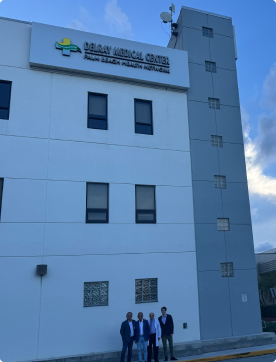
Plastic Surgery Trauma Associates operates within a hospital-based reconstructive plastic surgery framework serving Delray Beach, Boca Raton, Boynton Beach, Palm Beach County, and South Florida.
- Orthopedic trauma surgery
- Vascular surgery
- Spine surgery
- General surgery
- Burn care
- Infectious disease
- Rehabilitation
- Wound center follow-up
- Regional transfer pathways
Reconstructive Second Opinion for a Stalled Wound
When a wound has required repeated care without durable progress, a reconstructive plastic surgery opinion may help clarify whether escalation is needed.
This does not mean every non-healing wound requires surgery.
It means the wound should be evaluated for structural barriers to healing: exposed structures, inadequate blood supply, excessive tension, dead space, infection risk, tissue loss, pressure, shear, edema, or failed prior closure.
A stalled wound may remain open because the treatment plan is wrong.
It may also remain open because the wound biology is unfavorable, the tissue is unstable, or the necessary reconstructive conditions are not yet present.
The first step is understanding why the wound has not healed.
When to Seek a Reconstructive Plastic Surgery Opinion for a Wound
A plastic surgery opinion may be appropriate when:
- A wound is not healing
- A surgical incision has reopened
- Tendon, bone, hardware, implant, joint, nerve, vessel, or deeper structure is exposed
- A prior closure failed
- Drainage persists
- Infection risk remains high
- Tissue is fragile or ischemic
- A traumatic wound has soft tissue loss
- A burn wound remains unstable
- A wound repeatedly breaks down
- A case manager, physician, or family is concerned that wound care alone is not enough
Early evaluation may preserve reconstructive options before the wound deteriorates further.
Complex Wound Reconstruction in Delray Beach, Boca Raton, Boynton Beach, and Palm Beach County
Plastic Surgery Trauma Associates serves Palm Beach County and South Florida, including Delray Beach, Boca Raton, Boynton Beach, Lake Worth, and surrounding communities.
This page is intended for patients, families, physicians, case managers, attorneys, and referral sources trying to understand when a complex wound may require reconstructive plastic surgery.
The practice focus is hospital-based reconstruction for wounds involving failed healing, exposed structures, trauma, postoperative breakdown, fragile tissue, scar instability, and complex revision.
Related Reconstructive Plastic Surgery Topics
- Plastic Surgery in Delray Beach and Palm Beach County
- Scar Revision After Trauma and Burns
- Hardware Exposure and Postoperative Wound Failure
- Extremity & High-Energy Trauma Reconstruction
- Limb Salvage and Replantation
- Peripheral Nerve Reconstruction
- Burn Reconstruction and Contracture Release
- Spinoplastics Spine Soft Tissue Reconstruction
- Geriatric Tissue Salvage
- Research and Publications
- Contact
FAQ
Complex wound reconstruction is reconstructive plastic surgery for wounds that cannot reliably heal with simple closure or routine wound care alone. These wounds may involve exposed tendon, bone, hardware, tissue loss, failed closure, infection risk, trauma, burns, or fragile tissue.
A wound may need plastic surgery evaluation when it is not healing, repeatedly breaks down, exposes tendon, bone, hardware, implant, joint, nerve, or vessel, or has failed prior closure. Complex wounds often require analysis of tissue viability, blood supply, tension, and reconstructive options.
Yes, selected non-healing wounds may require plastic surgical reconstruction. Treatment depends on blood supply, tissue quality, infection control, wound depth, exposed structures, medical risk factors, and whether durable coverage is possible.
No. Many non-healing wounds require wound care, but some become reconstructive problems when there is exposed tendon, bone, hardware, tissue loss, failed closure, poor blood supply, infection risk, or mechanical stress preventing durable healing.
Escalation may be appropriate when a wound is not progressing, repeatedly breaks down, exposes deeper structures, threatens hardware, or requires flap or graft reconstruction for durable coverage.
Wound care may involve dressings, debridement, compression, offloading, and monitoring. Wound reconstruction involves surgical planning to restore durable coverage when a wound has exposed structures, tissue loss, failed closure, instability, or mechanical problems preventing healing.
A skin graft transfers skin onto a prepared wound bed. A flap brings vascularized tissue into or over a wound and may be needed when tendon, bone, hardware, joint, implant, or dead space requires more durable coverage.
Exposed tendon, bone, or hardware may be a high-risk finding requiring prompt medical evaluation. These wounds may need infection control, vascularized tissue coverage, staged reconstruction, or hospital-based escalation depending on severity.
Exposed hardware may require reconstructive plastic surgery when durable vascularized soft tissue coverage is needed to protect orthopedic hardware, spinal instrumentation, implants, tendon, bone, or joint structures.
A failed closure may be revised, but the cause of failure should be evaluated first. Infection, tension, blood supply, tissue loss, dead space, hardware exposure, radiation, diabetes, smoking, or fragile tissue may all change the reconstructive plan.
Flap reconstruction uses vascularized tissue to cover a wound, protect deeper structures, fill dead space, or improve durability. Flaps may be local, regional, muscle-based, fasciocutaneous, or microsurgical depending on the wound.
A skin graft can help selected wounds, but it requires an appropriate wound bed and adequate blood supply. Wounds with exposed tendon, bone, hardware, or poor vascularity may require flap reconstruction or staged preparation instead.
A traumatic wound is complex when it involves crush injury, degloving, tissue loss, exposed tendon, bone, hardware, open fracture, contamination, burn injury, vascular compromise, nerve injury, or failed closure.
Plastic Surgery Trauma Associates serves Delray Beach, Boca Raton, Boynton Beach, Lake Worth, Palm Beach County, and South Florida with emphasis on reconstructive plastic surgery for complex wounds, trauma, exposed structures, failed healing, and postoperative wound failure.
Educational Disclaimer
This website provides general educational information only. It does not provide medical advice, diagnosis, or treatment recommendations. Use of this website does not create a physician-patient relationship. Medical decisions require direct evaluation by a licensed healthcare professional. For emergencies, call 911 or seek immediate emergency medical care.
Reviewed By
Reviewed by Plastic Surgery Trauma Associates
Andrew Mark Klapper, M.D.
Anthony N. Dardano, D.O., F.A.C.S.
Hospital-based reconstructive plastic surgery service
Palm Beach County / South Florida