Plastic Surgery in Delray Beach and Palm Beach County
Plastic Surgery Beyond Cosmetic Surgery
Plastic surgery includes cosmetic surgery, but it is not defined by cosmetic surgery alone.
At its core, plastic surgery is the surgical specialty of tissue: skin, fat, muscle, tendon, nerve, blood supply, scar, contour, wound healing, structure, and function.
Cosmetic plastic surgery applies these principles to elective improvement of appearance, proportion, aging, and contour.
Reconstructive plastic surgery applies the same principles to trauma, wounds, burns, scars, facial injury, hand injury, nerve injury, exposed bone or hardware, postoperative wound failure, cancer reconstruction, congenital deformity, and complex revision after failed healing.
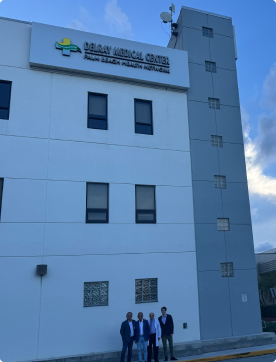
Plastic Surgery Trauma Associates is a hospital-based plastic surgery practice serving Delray Beach, Boca Raton, Boynton Beach, Palm Beach County, and South Florida. The group includes Andrew Mark Klapper, M.D. and Anthony N. Dardano, D.O., F.A.C.S., plastic and reconstructive surgeons focused on the reconstructive side of the specialty.
Within plastic surgery, trauma reconstruction is an even smaller and more demanding subset. These are cases where a plastic surgeon must assess tissue viability in real time, formulate a reconstructive plan under pressure, and restore soft-tissue coverage, scar control, contour, and function when the anatomy is damaged and the tissue is unstable.
This site explains the reconstructive side of plastic surgery for patients, families, physicians, attorneys, case managers, and searchers trying to understand serious tissue problems.
Board-Certified Plastic Surgery Is a Small Surgical Specialty
Plastic surgery is one of the smallest and most specialized fields in American surgery.
The American Board of Plastic Surgery reports approximately 7,749 actively practicing board-certified plastic surgeons in the United States as of January 2026. The total number of ABPS board-certified plastic surgeons since 1937 is 10,940.
By comparison, general surgery is much larger. The American Board of Surgery reports approximately 35,000 currently board-certified surgeons across its specialties, including approximately 30,000 in general surgery.
Within plastic surgery, trauma reconstruction is an even smaller and more demanding subset.
These are the cases where a plastic surgeon must walk into an injury, assess tissue viability in real time, formulate a reconstructive plan, and deliver soft-tissue reconstruction under pressure.
Often, no two operations are the same.
Burns, tissue loss, exposed bone or hardware, nerve injury, tendon injury, crush wounds, scar deformity, failed healing, traumatic amputation, and limb-threatening defects require judgment that cannot be reduced to a routine procedure.
Very few plastic surgeons build their practice around this space.
This is where plastic surgery is tested at its highest level.
Plastic Surgery Trauma Associates
Plastic Surgery Trauma Associates is a hospital-based reconstructive plastic surgery group serving Delray Beach, Boca Raton, Boynton Beach, Palm Beach County, and South Florida.
The group focuses on the reconstructive side of plastic surgery: trauma reconstruction, complex wound reconstruction, scar revision, burn reconstruction, hand and nerve injury, exposed hardware, limb salvage, facial trauma, geriatric tissue salvage, and complex revision after failed healing.
The practice is led by plastic and reconstructive surgeons whose work is grounded in hospital-based reconstruction, academic training, trauma-system integration, peer-reviewed publication, and operative management of complex soft-tissue injury.
Andrew Mark Klapper, M.D.
Andrew Mark Klapper, M.D. is a board-certified plastic and reconstructive surgeon focused on trauma, complex wound reconstruction, soft-tissue injury, and surgical innovation.
He serves as Assistant Professor, Department of Surgery, at Florida Atlantic University Charles E. Schmidt College of Medicine. He also serves as Assistant Site Director for the integrated plastic surgery training program and as Core Faculty for the FAU vascular surgery residency at Delray Medical Center.
Dr. Klapper’s hospital-based practice includes plastic surgery trauma alert coverage, burn-related trauma evaluation, inpatient plastic surgery consultation, operative trauma coverage, and participation in regional transfer care for complex soft-tissue cases. His clinical work includes traumatic avulsion wounds, severe traumatic soft-tissue loss in open fracture, geriatric skin injury, complex wound care, exposed bone, tendon, nerve, vessel, joint, and hardware, postoperative wound breakdown, orthopedic and spine wound breakdown, dog bite wounds, degloving injuries, and acute burn management.
His training includes plastic surgery residency at NYU / the Institute of Reconstructive Plastic Surgery, experience at Bellevue Hospital Center’s multidisciplinary hand service and regional replant center, and AO Craniofacial Trauma Fellowship training at Peking University School of Stomatology.
Dr. Klapper’s peer-reviewed work includes publications on SMART muscle reconstruction, complex wound reconstruction cost modeling, severe soft-tissue loss in open fracture, traumatic avulsed skin, external tissue expansion, minced expansion grafting, geriatric skin tears, and nonextremity replantation.
Anthony N. Dardano, D.O., F.A.C.S.
Anthony N. Dardano, D.O., F.A.C.S. is a plastic and reconstructive surgeon and senior academic surgeon. He currently serves as Full Professor and Chief of Plastic Surgery Trauma at Delray Medical Center.
Dr. Dardano’s background includes plastic and reconstructive surgery practice, FAU surgical education involvement, and long-standing hospital affiliation with Delray Medical Center.
His surgical training includes general surgery residency at Sinai Hospital / Wayne State University, plastic and reconstructive surgery residency at the University of Texas Medical Branch, and focused specialty training in microsurgery at Baylor College of Medicine, acute burn surgery and reconstructive burn surgery at Shriners Burn Institute, and cancer reconstruction / microsurgery at MD Anderson Cancer Center.
His prior CV lists Diplomate status with the American Board of Plastic Surgery, Diplomate status with the American Board of Surgery, Fellowship in the American College of Surgeons, membership in the American Society of Plastic Surgeons, and membership in the American Society for Aesthetic Plastic Surgery. Current board-certification status should be verified before adding “board-certified” language to the live page.
Dr. Dardano’s academic and publication record includes work in wound management, negative pressure wound therapy, complex sternal wound reconstruction, abdominal wall reconstruction, burn care, and reconstructive surgery. His CV lists journal publications, book chapters, invited lectures, national and international faculty roles, and hospital leadership positions, including prior Chief of Staff at Delray Medical Center and prior Chief Medical Officer at Boca Raton Regional Hospital.
Coordinated Reconstructive Plastic Surgery Leadership
Together, Dr. Klapper and Dr. Dardano establish Plastic Surgery Trauma Associates as a physician-led reconstructive plastic surgery entity focused on the high-acuity side of the specialty.
The group’s work centers on plastic surgery problems where anatomy, blood supply, tissue viability, scar behavior, infection risk, exposed structures, nerve and tendon function, and operative sequencing determine outcome.
This physician-level authorship matters for local plastic surgery search. Patients, families, physicians, attorneys, case managers, and searchers looking for “plastic surgery,” “plastic surgeon near me,” or “reconstructive plastic surgery” in Delray Beach and Palm Beach County should be able to identify the surgeons, the practice, the hospital-based focus, and the reconstructive scope of the group.
Cosmetic Surgery and Reconstructive Plastic Surgery Share the Same Foundation
Cosmetic plastic surgery and reconstructive plastic surgery are not separate surgical universes.
They come from the same foundation:
- Tissue handling
- Blood supply
- Scar placement
- Tension control
- Symmetry
- Contour
- Proportion
- Function
- Structural support
- Surgical judgment
The difference is the clinical problem.
Cosmetic surgery improves form.
Reconstructive plastic surgery restores form and function.
Trauma reconstruction tests whether those principles can be applied when the anatomy is damaged, the tissue is unstable, and the consequences are permanent.
That is why reconstructive trauma belongs on a serious plastic surgery homepage.
Reconstructive Plastic Surgery in Palm Beach County
Patients searching for plastic surgery in Palm Beach County may be searching for many different reasons.
Some are searching for cosmetic surgery.
Others are searching because of a traumatic scar, dog bite, burn, wound failure, surgical complication, non-healing wound, exposed hardware, hand injury, facial injury, or post-injury deformity.
Plastic Surgery Trauma Associates is specifically relevant to the reconstructive side of that search.
The practice serves Palm Beach County and South Florida, including Delray Beach, Boca Raton, Boynton Beach, Lake Worth, and surrounding communities.
The focus is plastic surgery for serious tissue problems:
- Wounds that fail
- Scars that deform
- Burns that contract
- Nerves that lose function
- Tendons that lose glide
- Tissue that does not survive
- Hardware, tendon, or bone that becomes exposed
- Injuries that require hospital-based reconstruction
This is the reconstructive foundation of plastic surgery applied to difficult clinical problems.
Why Trauma Reconstruction Belongs in Plastic Surgery
The hardest plastic surgery cases are often not elective.
They arrive after injury, infection, tissue loss, burns, crush injury, nerve damage, wound failure, exposed structures, or failed healing.
In these cases, the plastic surgeon must evaluate:
- What tissue is alive
- What tissue is likely to fail
- Whether blood supply is adequate
- Whether tendon, bone, nerve, or hardware is exposed
- Whether infection or contamination changes the plan
- Whether closure would create excessive tension
- Whether scar contracture will limit function
- Whether a graft, flap, or staged reconstruction is required
- Whether nerve or tendon function can be restored
- Whether the patient needs hospital-based escalation
This is plastic surgery at its most consequential.
The goal is not simply to close a wound.
The goal is durable reconstruction, functional preservation, scar control, and prevention of avoidable deterioration.
Common Reasons People Search for Plastic Surgery
People search for plastic surgery for many reasons.
Some are looking for cosmetic procedures. Others are looking for help after injury, surgery, scarring, burns, infection, wound failure, or tissue loss.
Plastic Surgery Trauma Associates is most relevant when the search involves:
- A scar after trauma, burn, dog bite, or surgery
- A wound that will not heal
- Exposed tendon, bone, implant, or orthopedic hardware
- Facial injury or post-traumatic deformity
- Hand injury with numbness, weakness, stiffness, or tendon injury
- Burn scar, contracture, or functional restriction
- Failed prior closure or recurrent wound breakdown
- Complex revision after poor healing
- Limb-threatening tissue loss
- A need for hospital-based reconstructive judgment
This is where plastic surgery becomes reconstructive rather than cosmetic.
Scar Revision After Trauma, Burns, Dog Bites, and Surgery
Scar revision is a major bridge between cosmetic and reconstructive plastic surgery.
Scars may follow dog bites, facial lacerations, burns, road rash, crush injury, surgery, infection, or traumatic wounds.
A scar may be painful, tight, thick, widened, raised, depressed, tethered, unstable, or deforming.
Post-trauma scar revision may involve surgical revision, local tissue rearrangement, contracture release, resurfacing, grafting, flap reconstruction, or staged correction depending on the anatomy and tissue quality.
Complex Wound Reconstruction
Complex wound reconstruction is a core part of reconstructive plastic surgery.
A wound becomes complex when it involves exposed tendon, exposed bone, exposed hardware, tissue loss, infection risk, poor blood supply, failed prior closure, or fragile tissue biology.
These wounds often require more than dressing changes.
They may require debridement, perfusion assessment, staged reconstruction, grafting, flap coverage, vascularized tissue transfer, or coordinated hospital-based wound surveillance.
Facial Trauma and Post-Traumatic Deformity
Facial trauma combines structure, visibility, expression, airway, vision, occlusion, and identity.
Plastic surgery may be involved after facial fractures, dog bites, facial lacerations, lip injury, eyelid injury, nasal trauma, soft tissue avulsion, traumatic facial scars, or contour deformity.
High-energy facial trauma may require hospital-based reconstruction when skeletal injury, soft tissue loss, airway concern, neurologic injury, or orbital involvement is present.
Post-traumatic facial deformity may require staged correction after swelling, scarring, and tissue behavior become clear.
Hand, Nerve, and Extremity Reconstruction
The hand and extremity are functionally demanding areas of plastic surgery.
Injuries may involve tendon laceration, peripheral nerve injury, crush trauma, industrial injury, traumatic amputation, exposed bone, exposed hardware, soft tissue loss, burn contracture, or failed prior repair.
Plastic surgery in this setting is built around function.
Reconstruction may include tendon repair, nerve repair, nerve grafting, tendon transfer, replantation assessment, flap coverage, microsurgical reconstruction, staged functional reconstruction, and hand therapy coordination.
Saving tissue is not enough.
The objective is meaningful use.
Burn Reconstruction and Contracture Release
Burn injuries may continue to evolve after the initial wound has closed.
Scarring can tighten, thicken, contract, restrict motion, distort contour, or compromise function.
Reconstructive plastic surgery may be needed for burn scars, hand burns, neck contractures, unstable grafts, scar contractures, functional restriction, or post-burn deformity.
Treatment may involve contracture release, grafting, flap reconstruction, resurfacing, tissue expansion, scar modulation, and staged functional restoration.
Burn reconstruction is not surface appearance alone. It is about pliability, motion, durability, and function.
Hardware Exposure and Postoperative Wound Failure
Exposed hardware, exposed tendon, exposed bone, or wound breakdown after surgery is a structural reconstructive problem.
These problems may occur after orthopedic trauma, spine surgery, cardiac surgery, joint replacement, fracture fixation, infection, or failed closure.
Plastic surgery may be required when durable vascularized coverage is needed to protect deeper structures and reduce the risk of progressive failure.
The reconstructive plan must account for tissue viability, blood supply, contamination, infection risk, mechanical stress, and the stability of the underlying reconstruction.
Limb Salvage and Replantation
Limb salvage and replantation are among the most time-sensitive areas of reconstructive plastic surgery.
These cases may involve traumatic amputation, partial amputation, vascular compromise, crush injury, exposed bone, exposed hardware, nerve injury, tendon loss, muscle loss, or extensive soft tissue destruction.
Plastic surgery in this setting may require microsurgical repair, vascularized tissue transfer, staged reconstruction, nerve repair, tendon restoration, and coordinated rehabilitation.
The first principle remains life over limb.
When salvage is biologically appropriate, timing, infrastructure, and operative sequencing shape the final outcome.
Geriatric Skin Tears and Tissue Salvage
Geriatric skin tears and avulsion injuries are often underestimated.
In older patients, fragile skin, reduced elasticity, impaired microvascular integrity, anticoagulation, and shearing forces can turn a seemingly simple wound into a major soft tissue problem.
Plastic surgery may be relevant when tissue viability is uncertain, hematoma undermines skin, perfusion is compromised, or prolonged wound failure threatens mobility and independence.
Tissue salvage in this setting emphasizes preservation of viable tissue, perfusion-aware decision-making, shear control, and structured follow-up.
Spinoplastics / Spine Soft Tissue Reconstruction
Spine surgery can fail at the soft tissue level.
When muscular coverage over instrumentation is inadequate, wound breakdown, infection, dead space, and exposed hardware may follow.
Spinoplastics refers to planned or salvage soft tissue reconstruction in spine surgery, including muscle flap coverage, dead space control, and durable closure over spinal instrumentation.
This is not cosmetic closure.
It is structural soft tissue management around complex spine surgery.
Complex Revision After Failed Healing
Some plastic surgery cases begin after a prior repair has failed.
Failure may appear as wound reopening, persistent drainage, unstable scar, exposed hardware, dead tissue, recurrent infection, scar contracture, contour deformity, or persistent functional limitation.
Revision after failed healing is different from routine cosmetic revision.
The cause of failure must be identified before the next operation is planned.
Common causes include blood supply, tension, infection, tissue quality, mechanical stress, exposed structures, smoking, diabetes, anticoagulation, radiation, trauma severity, and inadequate soft tissue coverage.
When standard options end, reconstructive evaluation may still identify a path forward.
Plastic Surgery for Scars
Scar revision is one of the most common reasons people search for plastic surgery.
A scar may be visible, painful, tight, thick, unstable, widened, depressed, raised, discolored, tethered, or functionally limiting.
Common scar categories include:
- Facial scars
- Dog bite scars
- Burn scars
- Surgical scars
- Trauma scars
- Road rash scars
- Crush injury scars
- Contracture scars
- Scar tethering after wound breakdown
- Scars that reopen or remain unstable
A reconstructive plastic surgery approach to scars considers more than appearance.
It considers tissue quality, tension, blood supply, location, movement, contour, functional restriction, and whether the scar is a sign of deeper tissue failure.
For some patients, scar revision is a local procedure.
For others, it is part of broader reconstruction involving contracture release, grafting, flap coverage, resurfacing, or staged tissue repair.
Plastic Surgery for Wounds That Will Not Heal
A wound that will not heal may require plastic surgery when the problem is structural.
Examples include:
- Exposed tendon
- Exposed bone
- Exposed orthopedic hardware
- Exposed implant or instrumentation
- Postoperative wound breakdown
- Chronic non-healing wounds
- Failed closure
- Complex traumatic wounds
- Infection-risk wounds
- Burn-related wound instability
- Fragile geriatric tissue
- Wounds after crush, shear, or avulsion injury
Complex wound reconstruction is not simply choosing a dressing.
The reconstructive surgeon must determine whether the wound has adequate blood supply, whether tissue is viable, whether deeper structures are protected, whether infection has been controlled, whether closure will hold, and whether staged reconstruction is needed.
The endpoint is durable wound stability.
Why Complex Reconstruction Matters for Plastic Surgery Judgment
Complex reconstruction and cosmetic plastic surgery share the same foundation: tissue quality, blood supply, scar control, tension, contour, proportion, symmetry, and judgment.
The difference is margin for error.
In cosmetic surgery, the tissues are usually healthy, the operation is planned, and the anatomy is predictable.
In trauma reconstruction, the tissues may be injured, contaminated, burned, crushed, scarred, infected, devascularized, missing, or previously operated on.
That environment forces the plastic surgeon to make real-time decisions about viability, coverage, contour, function, scar behavior, and staged repair.
For a patient searching broadly for plastic surgery, this matters.
The surgeon who works in complex reconstruction is applying the core principles of plastic surgery where they are hardest to execute.
Hospital-Based Plastic Surgery and Level I Trauma Integration
Some plastic surgery problems require more than an office setting.
Severe wounds, traumatic injuries, exposed structures, limb-threatening injuries, complex burns, facial trauma, hand injuries, and failed reconstructions may require hospital-based resources.
Hospital-based plastic surgery may involve:
- Multidisciplinary coordination
- Orthopedic trauma collaboration
- Vascular surgery involvement when perfusion is threatened
- Neurosurgery or spine surgery coordination when relevant
- Burn care planning
- Staged operations
- Anesthesia support
- Inpatient monitoring
- Rehabilitation planning
- Trauma transfer coordination
Academic and Reconstructive Authority
Plastic Surgery Trauma Associates is organized around serious reconstructive plastic surgery.
The practice environment includes hospital-based trauma reconstruction, Level I trauma infrastructure, multidisciplinary operative coordination, and academic surgical training signals where applicable.
The program’s work includes:
- Extremity trauma reconstruction
- Limb salvage
- Replantation assessment
- Peripheral nerve reconstruction
- Complex wound reconstruction
- Burn reconstruction
- Geriatric tissue salvage
- Facial trauma reconstruction
- Hardware exposure and postoperative wound failure
- Spine soft tissue reconstruction
- Functional restoration after catastrophic injury
Academic credibility is supported by resident education, peer-reviewed publications, presentations, and research involving tissue salvage, perfusion, wound reconstruction, structural reconstruction, and complex trauma care where applicable.
This is the serious end of plastic surgery.
Not because cosmetic surgery is unimportant.
Because injury, wound failure, tissue loss, and functional compromise reveal how much the specialty can actually do.
Areas Served
Plastic Surgery Trauma Associates serves Palm Beach County and South Florida, including:
- Delray Beach
- Boca Raton
- Boynton Beach
- Lake Worth
- Palm Beach County
- Surrounding South Florida communities
Local searchers may arrive at this site after searching for plastic surgery, plastic surgeon near me, reconstructive plastic surgery, scar revision, wound reconstruction, burn reconstruction, hand injury plastic surgery, facial trauma reconstruction, or complex revision after failed healing.
The purpose of this page is to clarify that plastic surgery includes both cosmetic and reconstructive care, and that Plastic Surgery Trauma Associates focuses on the high-acuity reconstructive side of the specialty.
FAQ
Plastic surgery is a surgical specialty focused on tissue repair, reconstruction, contour, form, scar control, wound healing, and function. It includes both cosmetic plastic surgery and reconstructive plastic surgery.
No. Cosmetic surgery is one part of plastic surgery. Reconstructive plastic surgery is the broader foundation of the specialty and addresses injury, wounds, scars, burns, tissue loss, hand injury, nerve injury, facial injury, congenital or acquired deformity, and complex revision after failed healing.
Reconstructive plastic surgery restores tissue, structure, and function after trauma, burns, wound failure, infection, surgery, cancer, congenital problems, or failed healing. It may involve scar revision, wound reconstruction, flap surgery, grafting, microsurgery, hand reconstruction, nerve repair, burn reconstruction, or staged revision.
A board-certified plastic surgeon may practice cosmetic surgery, reconstructive surgery, or both. Reconstructive plastic surgery focuses on restoring tissue, structure, and function after injury, wounds, burns, cancer, infection, or failed healing. Cosmetic surgery focuses on elective improvement of appearance and contour. Both rely on tissue handling, blood supply, scar control, contour, and judgment.
Yes. Trauma reconstruction is a core part of reconstructive plastic surgery. It may involve traumatic wounds, facial injuries, dog bites, burns, hand injuries, nerve injuries, exposed tendon or bone, soft-tissue loss, limb-threatening defects, and scars after injury.
Many people search for plastic surgery after scars, dog bites, burns, wounds, traumatic injuries, exposed structures, or failed healing. Trauma reconstruction explains the reconstructive side of plastic surgery and helps patients understand when a problem may require more than routine closure or cosmetic revision.
A scar may merit plastic surgery evaluation if it is painful, thick, tight, raised, widened, unstable, tethered, deforming, cosmetically concerning, or limiting motion. Scars after dog bites, burns, facial injuries, surgery, and traumatic wounds may require reconstructive assessment.
Yes. Selected non-healing wounds may require plastic surgical evaluation, especially when tendon, bone, hardware, implant, or deep structures are exposed; when prior closure has failed; or when durable tissue coverage is needed.
Trauma plastic surgery involves injured tissue that may be crushed, contaminated, burned, scarred, devascularized, infected, or missing. Repair requires judgment about blood supply, tissue viability, timing, tension, scar behavior, exposed structures, nerve function, tendon function, and staged reconstruction.
Some burns heal without surgery. Others may require plastic surgery when there is deep tissue injury, unstable scarring, contracture, hand involvement, facial involvement, exposed structures, or long-term functional restriction.
Exposed tendon, bone, or hardware may indicate a high-risk wound requiring prompt medical evaluation. These wounds can require infection control, vascularized coverage, staged reconstruction, or hospital-based escalation depending on severity.
Cosmetic surgery and reconstructive plastic surgery share core principles: tissue handling, blood supply, scar placement, contour, proportion, symmetry, and tension control. Complex reconstruction tests those principles in injured or unstable tissue, where function and tissue survival are at stake.
Yes. Plastic Surgery Trauma Associates serves Palm Beach County and South Florida, including Delray Beach, Boca Raton, Boynton Beach, Lake Worth, and surrounding communities, with emphasis on reconstructive plastic surgery, trauma, wounds, scars, burns, hand injury, nerve injury, and complex revision.
Hospital-based plastic surgery matters when a wound, injury, burn, hand problem, or reconstruction requires multidisciplinary coordination, anesthesia support, staged surgery, inpatient monitoring, trauma transfer, vascular or orthopedic coordination, or rehabilitation planning.
Educational Disclaimer
This website provides general educational information only. It does not provide medical advice, diagnosis, or treatment recommendations. Use of this website does not create a physician-patient relationship. Medical decisions require direct evaluation by a licensed healthcare professional. For emergencies, call 911 or seek immediate emergency medical care.
Reviewed By
Reviewed by Plastic Surgery Trauma Associates
Andrew Mark Klapper, M.D.
Anthony N. Dardano, D.O., F.A.C.S.
Hospital-based reconstructive plastic surgery service
Palm Beach County / South Florida
Last reviewed: 24th June 2026